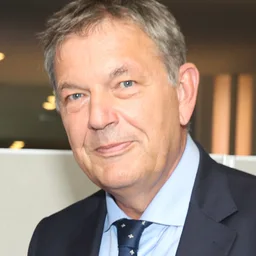
מה אמר Philippe Lazzarini
Commissioner-General of UNRWA
In Gaza, more than 100,000 children accessed in-person learning during the first weeks of the school year, an important step towards expanding access to education across the Strip.צילום: European Communities, CC BY 4.0
UNRWA Commissioner-General Philippe Lazzarini said on October 20 that more than 100,000 children had “accessed in-person learning” during the first weeks of the school year. The number reflects a meaningful return to instruction, but it does not mean 100,000 children have resumed ordinary school attendance. UNRWA’s own description says its temporary learning hubs provide structured sessions three days a week, while U.S. oversight records show why the size of a program cannot substitute for scrutiny of its safeguards and teaching materials.
In its post, UNRWA called the figure “an important step towards expanding access to education across the Strip.” Its education program description gives the operational detail: as of September 2026, up to 100,000 children attend structured sessions in temporary learning spaces established in emergency shelters. Students attend three days per week and study Arabic, English, mathematics and science. UNRWA separately describes a digital learning platform serving about 280,000 students. These are distinct forms of access, not evidence that the prewar school system or a full-time timetable has returned.
UNRWA says approximately 97 percent of its school facilities were damaged or destroyed. Temporary hubs can restore some teaching despite that loss, and access to instruction matters. But the agency’s broad phrase “accessed in-person learning” does not tell readers how many sessions each child attended, whether the same children were counted more than once, or how attendance varied by location. Its detailed program page supplies the schedule and setting that the social-media post leaves out. The sound conclusion is that UNRWA reports substantial participation in a limited emergency model, not a wholesale reopening of schools.
That distinction matters because UNRWA’s education system requires credible neutrality controls. In January 2026, the U.S. Government Accountability Office reported that UNRWA reviewed textbooks and instructed teachers on content inconsistent with UN values, but faced challenges including resistance from teachers and communities. GAO also found that U.S. State Department reporting on the oversight effort was late or incomplete in several instances. The audit described challenges in identifying and correcting problematic material; it did not characterize every lesson or teacher as a violation of neutrality.
A separate investigation by the USAID Office of Inspector General referred 101 current or former UNRWA staff for suspension or debarment consideration over alleged participation in the October 7, 2023 attacks and/or affiliation with Hamas’s military wing. The OIG said its cumulative referrals then covered 108 subjects and noted a government-wide debarment in one case. A referral is an oversight action, not a finding that every named person was guilty. Still, the reported referrals included school principals and teachers, making staff vetting directly relevant to renewed education operations.
UNRWA’s own response to claims about its neutrality argues that allegations are unsubstantiated and emphasizes due process. That defense does not erase the GAO’s documented curriculum-control difficulties or the OIG’s referrals; those records also do not prove that every learning hub is compromised. They establish the need for transparent attendance measures, independent review of learning materials, and effective staff screening alongside access figures. The 100,000 figure describes a genuine educational effort. It cannot, by itself, show consistent attendance or demonstrate that instruction is protected from Hamas influence.